PVC vs. aluminum windows: which is better for a residential project in Mexico?
Compare PVC and aluminum windows on insulation, airtightness, climate, maintenance, and total cost so you can specify the right system in Mexico.
Choosing windows and doors often looks like an aesthetic decision: color, size, opening type, and price. The profile material, though, directly affects indoor comfort, energy use, maintenance, and the service life of a home.
The comparison between PVC vs aluminum windows has no universal winner. Both materials can perform well when the system is correctly designed, manufactured, and installed. The difference appears in project priorities: thermal insulation, noise control, environmental resistance, opening sizes, budget, and architectural language.
It also matters to evaluate the window as a system. The profile is only one part; glass, hardware, gaskets, structural reinforcement, and installation determine much of the final performance. An efficient profile can lose its advantages with the wrong glass or a poor seal against the wall.
Key technical differences between PVC and aluminum
Thermal insulation and U-value
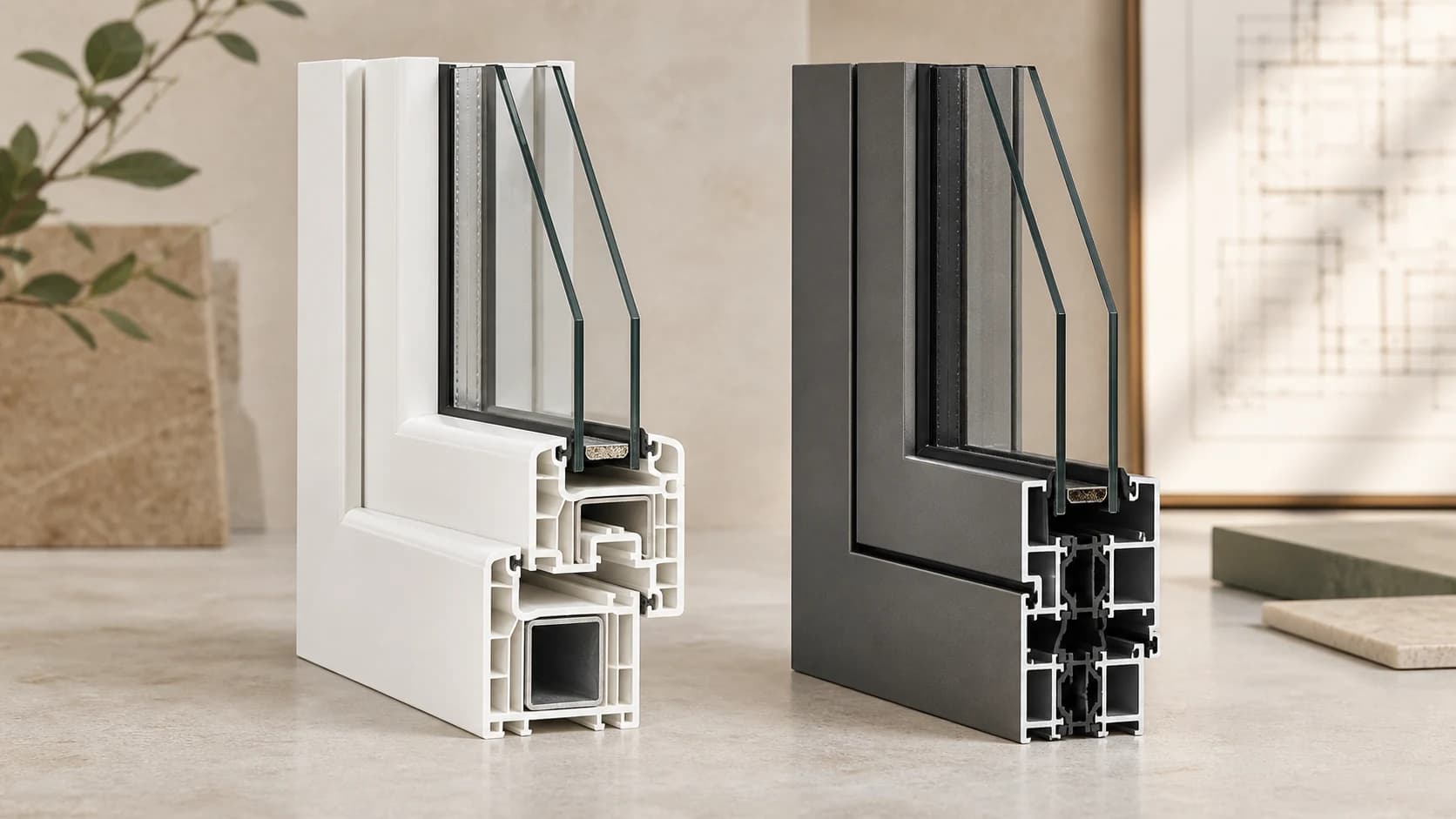
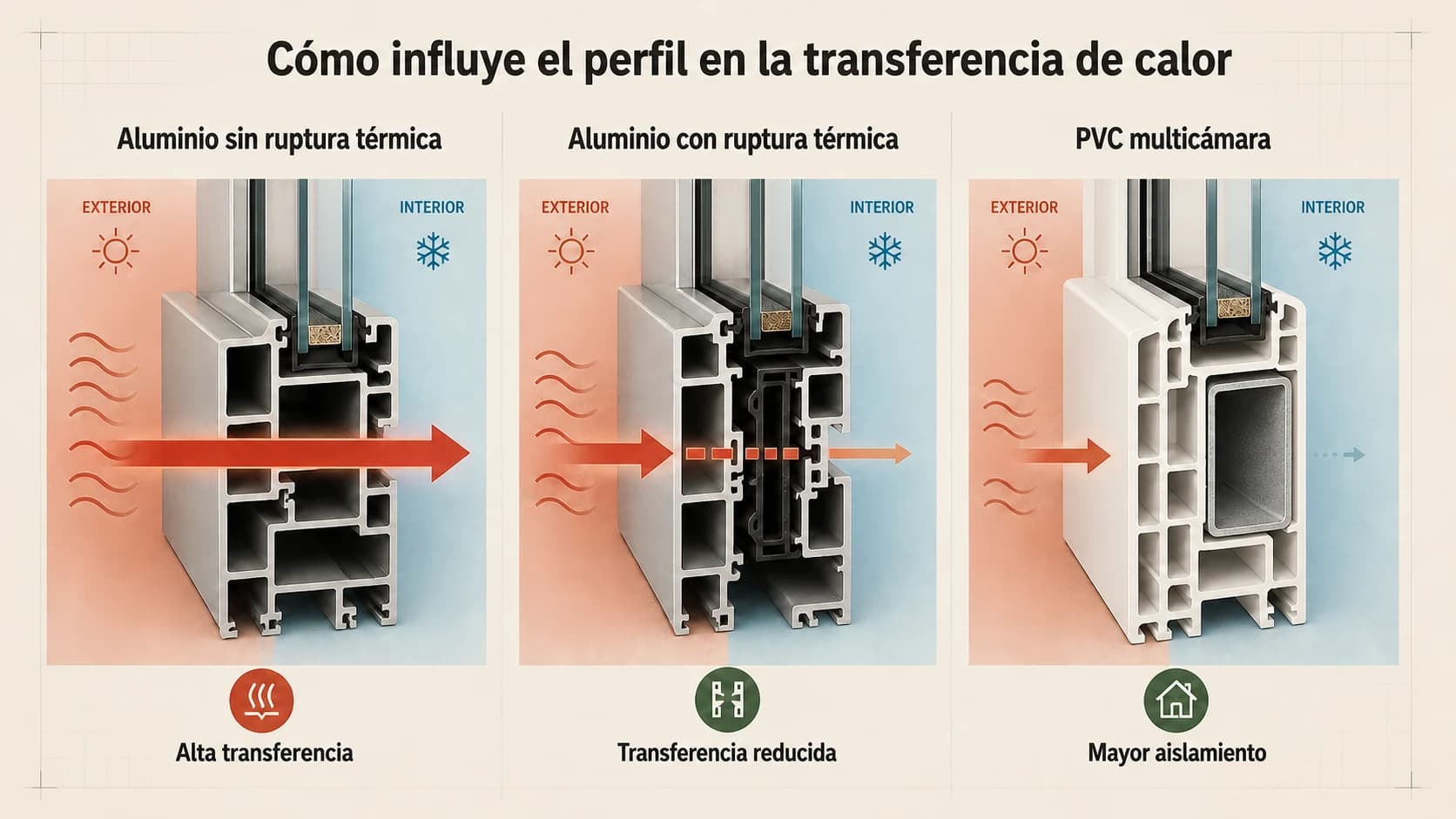
U-value measures how much heat passes through a building element, usually in W/m²K: the lower the number, the better the insulation. PVC has naturally low thermal conductivity, and its profiles usually integrate several internal chambers that slow heat transfer. That makes it a strong option for high-performance windows.
Aluminum, by contrast, conducts heat easily. Thermal-break systems reduce that transfer by separating the interior and exterior faces of the profile with an insulating material. A good thermal-break system can reach competitive efficiency, though it is usually more complex and expensive than a PVC profile with equivalent performance.
In Mexico, most aluminum windows used in conventional residential work do not include a thermal break. They are typically made with continuous aluminum profiles, so they transfer heat or cold between outdoors and indoors. Specialized thermal-break lines exist, but they usually belong to higher ranges and cost considerably more.
When comparing PVC vs aluminum windows, review the technical data sheet and confirm this feature explicitly. A thermal break should not be confused with internal chambers, a special finish, or a thicker profile. Double glazing alone also does not mean an aluminum window insulates well.
In both materials, glass is decisive for window thermal insulation. Depending on the project, the profile can be combined with insulating glass units, air or gas cavities, suitable spacers, and low-e or solar-control glass. When designing a window solution, profile and glazing should be specified together.
Acoustic insulation
Noise control does not depend on the frame alone. Glass thickness and makeup, laminated glass, gasket quality, opening type, and installation airtightness all matter. Multi-chamber PVC profiles usually work with continuous perimeter seals; aluminum can also perform well with the right gaskets and a correctly specified glass unit.
In well-designed residential configurations, the complete system can achieve reductions of about 30 to 45 dB. Real results should be checked against the product data sheet or test. True acoustic insulation in windows is not just “double glass”: you need to identify the noise source, its intensity, and its dominant frequencies.
Airtightness, corrosion, and maintenance
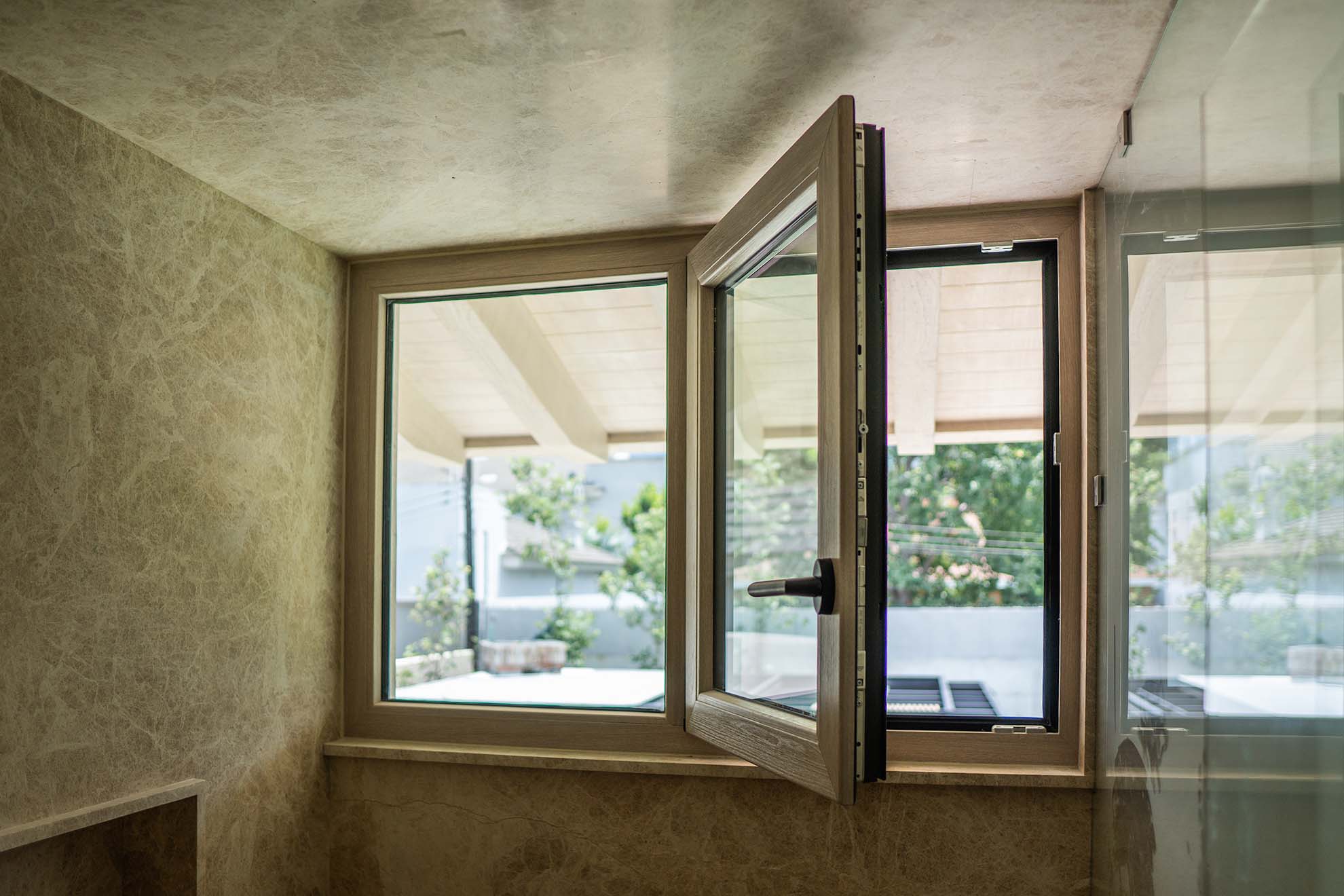
Window airtightness prevents infiltration of air, dust, and water. It also reduces drafts and helps air conditioning or heating work more efficiently. PVC systems usually use welded corners and two or more gasket levels. In aluminum, the result depends especially on joint design, drainage, and seals. In both cases, a casement or tilt-and-turn opening usually seals better than a traditional slider.
PVC does not oxidize and generally needs profile cleaning plus periodic checks of hardware, gaskets, and drains. Aluminum also does not rust like steel, but it can show surface, galvanic, or pitting corrosion in aggressive environments, especially near the sea. Quality anodizing or coating, plus compatible fasteners and accessories, help protect it.
| Metric | PVC | Aluminum |
|---|---|---|
| Material conductivity | Low | High |
| Profile thermal performance | High by nature | Low in basic systems; high with a thermal break |
| Indicative whole-window U-value* | 1.0–2.5 W/m²K | 1.2–4.5 W/m²K, depending on the system |
| Possible acoustic reduction* | About 30–45 dB | About 30–45 dB |
| Airtightness | High in well-installed multi-chamber systems | Variable; high in specialized lines |
| Corrosion resistance | Does not oxidize | Good with the right finish; needs attention on the coast |
| Maintenance | Low | Low to moderate |
| Large openings | Good capacity with suitable reinforcement | Excellent structural stiffness |
| Initial cost | Medium | Low in basic lines; high with a thermal break |
Performance in Mexican climates
North: intense heat and thermal swings
In northern cities, facades can receive intense solar radiation and very high outdoor temperatures. Some regions also have cold nights or marked winters. Here it helps to limit heat transfer with insulating profiles, solar-control glass, and airtight installation. A PVC system for demanding conditions offers a direct thermal advantage; if aluminum is used, look for a thermal break and avoid basic lines in conditioned rooms.
Coasts: humidity, salinity, and wind
On the coast, corrosion, water penetration, and wind resistance matter. PVC has the advantage of not corroding from salt exposure, but its reinforcements, screws, and hardware also need a marine specification. Aluminum can work well near the sea with surface preparation, finish, compatible hardware, and maintenance. In both materials, check wind-pressure, air-permeability, and watertightness tests.
Altitude: cold nights and solar radiation
In high-altitude cities, sunny days can coexist with cold nights. Windows for extreme climate need insulating profiles and suitable glass to keep indoor temperatures more stable. A PVC system with insulating glass can be especially favorable. Thermal-break aluminum is also viable when the design needs slender sections or large openings.
Life cycle and total cost
Comparing purchase price alone can be misleading. Total cost includes the initial investment, installation, energy use, maintenance, repairs, and possible replacement. A basic aluminum window can look attractive, yet allow greater heat gain or loss. In a home that uses air conditioning for many hours, that difference can raise energy spend over the years.
PVC usually needs little upkeep and offers good insulation without depending on an extra thermal break. That can give a favorable performance-to-cost ratio in residential projects. High-performance aluminum can be a larger investment, but it adds stiffness, visually slim profiles, and capacity for large glazed areas.
In any material, poor installation reduces the return. Wall junctions must resolve anchoring, leveling, sealing, and water management. Polyurethane foam alone does not replace a complete installation solution.
Practical guide: when to choose each material
Choose PVC windows when:
- Thermal and acoustic insulation is the priority.
- The home uses air conditioning or heating regularly.
- You want high airtightness and low maintenance.
- The project is in a coastal, humid, or extreme-temperature zone.
- You want better comfort in bedrooms, exposed facades, or rooms near busy avenues.
Consider aluminum when:
- You need very large openings, heavy sashes, or especially slim profiles.
- The aesthetic requires metallic, anodized, or special-color finishes.
- The project includes large-format storefronts.
- A documented thermal-break system is available.
- The structural design demands high stiffness.
Many projects can also mix materials: PVC in bedrooms and rooms where thermal or acoustic comfort is the priority, and high-performance aluminum in large-format elements.
Before deciding, ask for comparable information for both systems: whole-window U-value, acoustic performance, airtightness class, water resistance, wind pressure, glass type, warranty, and installation specification. Comparing only wall thickness or chamber count does not reveal real performance.
A decision that must consider the complete system
In the PVC vs aluminum windows comparison, PVC usually stands out for thermal insulation, airtightness, and low maintenance. Aluminum stands out for stiffness, finish variety, and capacity for large glazed surfaces, but conventional residential aluminum in Mexico rarely includes a thermal break.
The best choice depends on climate, orientation, outdoor noise, dimensions, and expected comfort. More than picking a material in isolation, design a solution that integrates profile, glass, hardware, gaskets, and installation. You can also review the benefits of PVC windows before locking the specification.
At Fentexhaus we can evaluate your project conditions and define a specification that fits the climate and each room. Schedule a consultation with our team to compare alternatives and choose windows that add comfort, efficiency, and durability.